
Following X's March 2026 revision of its Suicide and Self-Harm Policy, we investigated whether self-harm content remained accessible on the platform. We found that users familiar with the coded language used within these communities could readily locate self-harm content. Much of the content framed self-injury as a competitive or aestheticised behaviour, while users frequently directed one another to private communities on other platforms. These findings highlight the need for evidence-based approaches to platform design, digital literacy, and child online safety that address how harmful content is discovered, shared, and reinforced across online communities.
Content warning: Reader discretion is advised. This article includes screenshots depicting self-harm to document the findings of our research. Some readers may find this material distressing. To minimise the risk of harm, all graphic imagery has been blurred while retaining sufficient context to support the analysis.
In March 2026, X revised its Suicide and Self-Harm Policy, which sets out the platform’s rules governing what suicide and self-harm-related content is allowed on the platform and what type of content is prohibited. Previously, the policy prohibited only content that promoted or encouraged suicide or self-harm. The updated policy expands these restrictions to include content that encourages, promotes, depicts, or actively engages in self-harm behaviours.
To assess the effectiveness of the revised policy and examine the self-harm content that remains accessible on the platform, we identified terms commonly associated with non-suicidal self-injury (NSSI), suicide, and self-harm. Using these terms, we searched for and joined communities that promote or normalise suicidal ideation across platforms. Our search on X identified three trends that raise questions about the effectiveness of the platform’s updated policy in limiting the availability and spread of self-harm-related content.
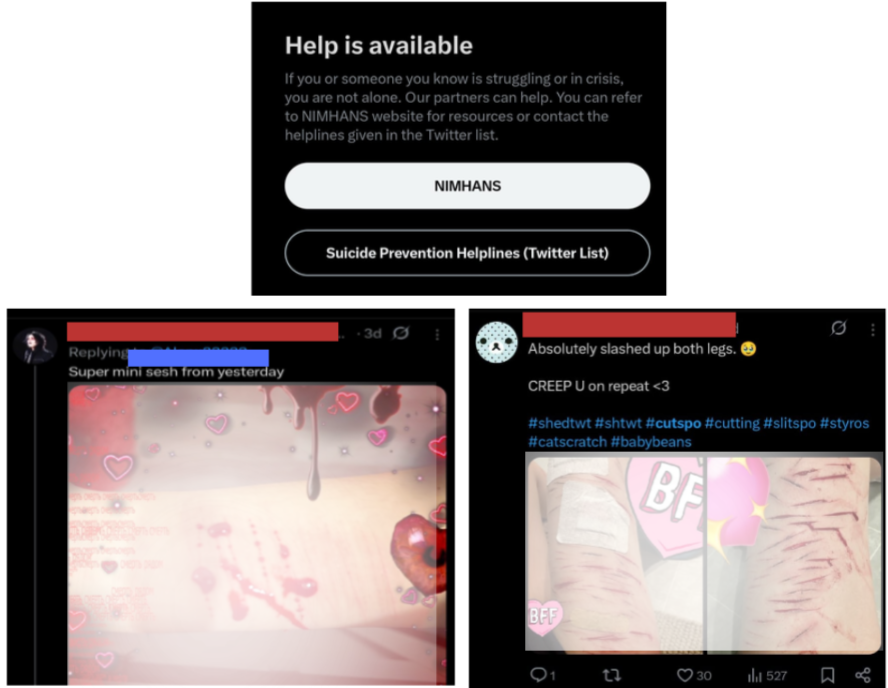
First, according to the updated policy, self-harm content that encourages, promotes, actively engages in, or depicts self-harm behaviours is against their rules. However, we have found that the platform fails to actively enforce the updated policy. When we searched X using terms associated with self-harm, the platform recognised these queries as potentially harmful and displayed a “Help is Available” banner. However, the resulting posts remained readily accessible. Search results were not filtered, most content was not blurred or otherwise obscured, and the material was accessible to accounts registered to users under 17.
Figure 1: Self-harm content posted on X
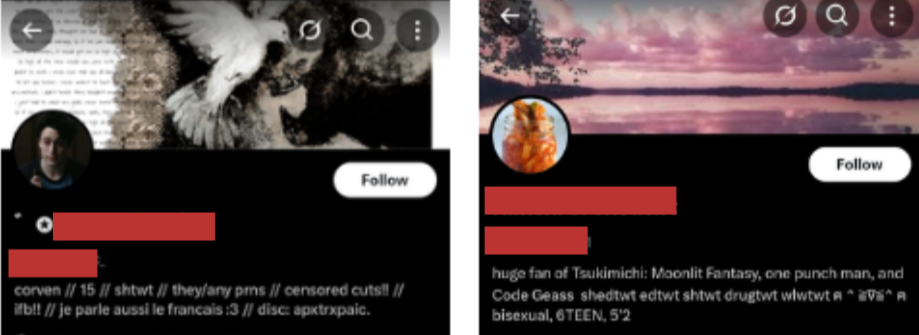
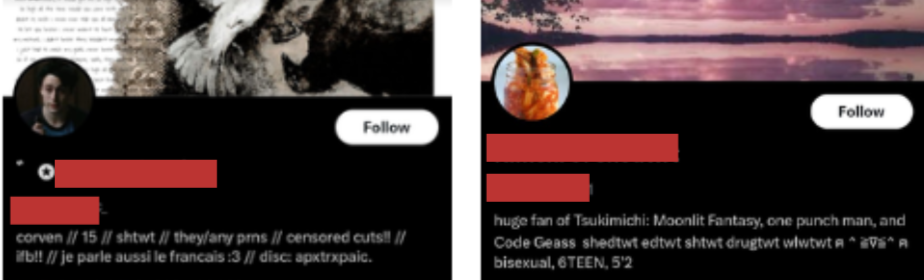
Moreover, many of the accounts actively posting self-harm content claimed to belong to minors. This is particularly concerning given evidence from a 2025 study showing that adolescents exposed to self-harm content on social media were 8.6 times more likely to engage in NSSI during the same week and reported stronger urges to self-harm.
Figure 2: Profiles of 15 and 16-year-olds on X actively posting NSSI content
Second, mapping conversations on X revealed a competitive contest-like pattern emerging among users. Users frequently posted about wanting to make their cuts look more aesthetic and serve as “cutspo” or inspiration for others to cut. For example, some users shared posts with the question, “Am I cutspo?” Some intentionally burnt “cute hearts” onto their skin. In contrast, others asked how to achieve a certain kind of scar through self-injury, seemingly competing with each other to get “better-looking” self-injury cuts or scars.
Figure 3: Posts discussing being “cutspo”, burning hearts and sharing tips on how to get a specific kind of scar
Third, many users on X included links in their bios or posts directing others to third-party platforms, where self-harm-related content could be accessed and private communication initiated through services such as Telegram and Discord. This migration to less visible, privately moderated spaces raises significant safety concerns. In a 2023 public service announcement, the FBI warned that such channels may be exploited by offenders to coerce minors into self-harm or the production of child sexual abuse material.
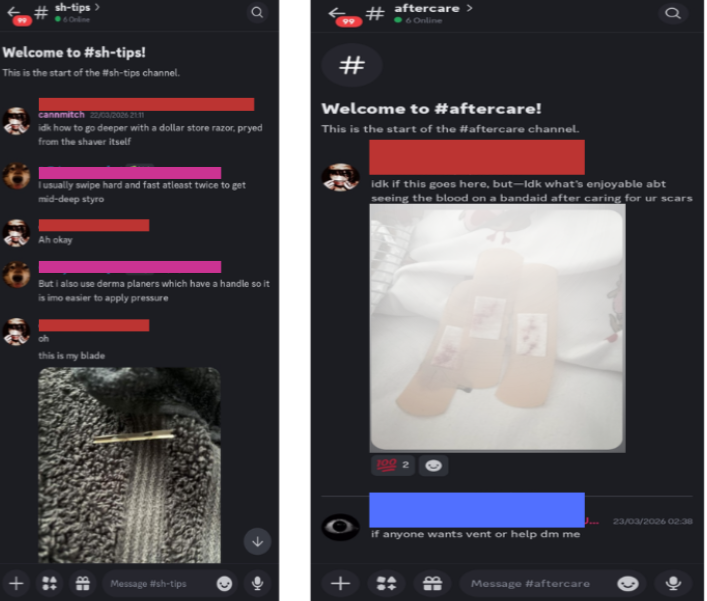
For instance,the links we found on X led us to private Discord servers where people discussed, promoted, and engaged in self-injury. While Discord actively bans servers related to self-harm, the presence of the channels we found indicates users may evade detection by creating servers with unrelated names, promoted through replies or Direct Messages on platforms like X. However, platforms must be more vigilant about the presence of such content, as well as the tactics users may deploy to evade existing controls.
Figure 4: Posts on X sharing Discord servers related to self-injury
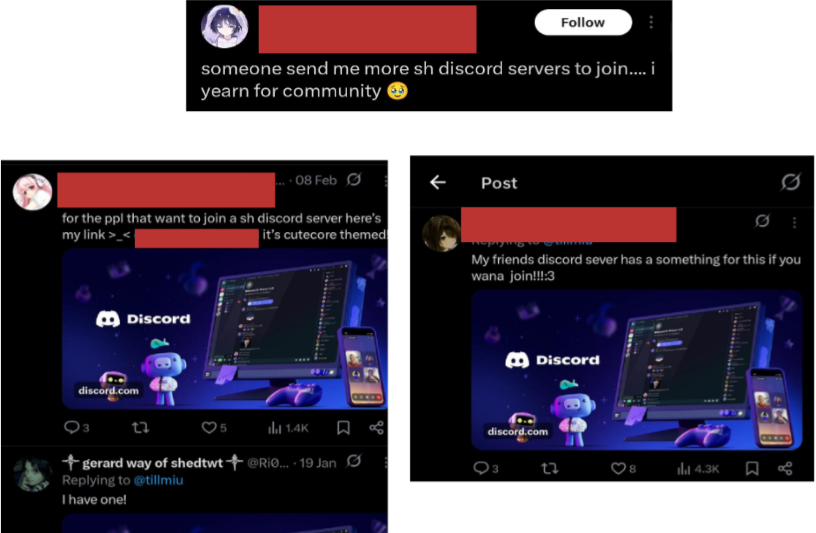
Figure 5: Self-harm content shared on private Discord servers
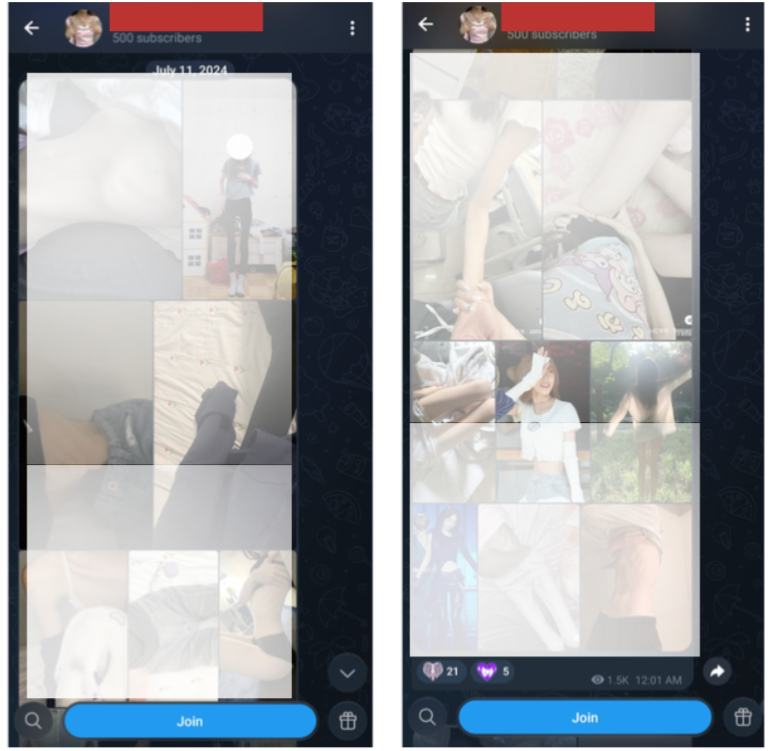
We were unable to join these channels to verify whether they carried this content because their administrators did not approve our requests. However, their existence is concerning. While Telegram does not maintain a policy specifically addressing self-harm content and limits its moderation efforts primarily to publicly viewable spaces, it does seemingly take them down when reported. We searched Telegram using keywords such as “bonespo” and “deathspo” and found additional public channels promoting self-harm. When we reported these as violent content, some were subsequently removed, suggesting that the platform may be addressing self-harm content through its broader policies on violent content. However, as we were able to use the global search feature to find such content, it indicates that the platform may not be taking proactive action against it.
Figure 6: Self-harm content available on public servers on Telegram
Discourse around the impact of social media on mental health tends to focus on screen time and digital addiction. However, a 2025 report by UNICEF found that the correlation between a higher screen time and lower emotional well-being was weak. Instead, the report indicates that adverse mental health outcomes correspond with exposure to harmful content, sexual abuse, and cyber-bullying. Posts exposing minors to self-harm content present an example of how exposure to harmful content can lead to adverse mental health outcomes. A 2024 study highlighted that there is a positive correlation between regular exposure to self-harm content and behaviour related to Non-Suicidal Self Injury (NSSI) behaviour among children and teenagers. Regulating content promoting self-injury requires deeper reflection on platform design obligations and on digital literacy initiatives that help children and parents understand the nature of harmful content and provide them with Self-Help tools to mitigate harm. Most importantly, there is a need to ensure that any intervention, particularly when it comes to children, is supported by robust empirical evidence that incorporates and empathises with children’s perspectives.