
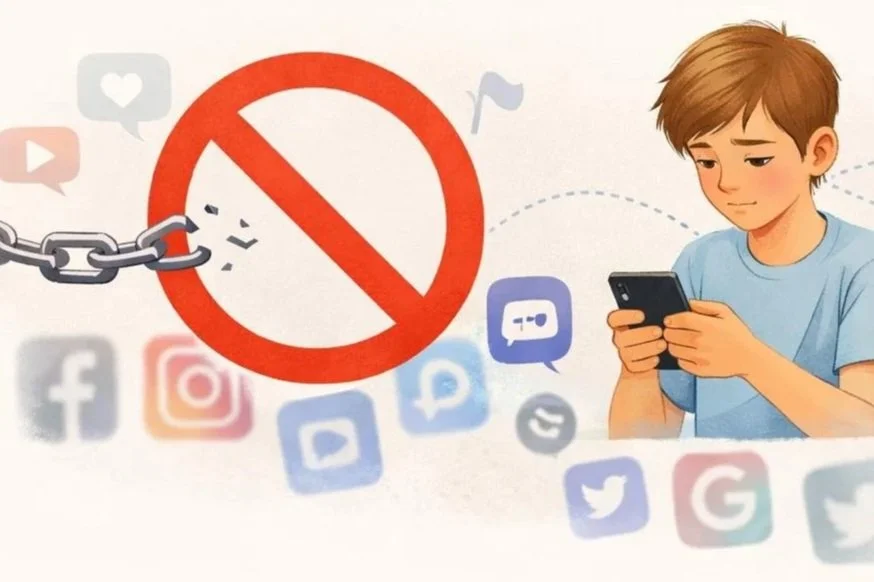
Denmark’s social media ban for children under 15 addresses legitimate concerns about rising anxiety, disrupted sleep, and harmful content exposure among young people. However, such bans are fundamentally flawed and may worsen the problems they aim to solve. Evidence from Louisiana, Utah, China, and South Korea shows age-based restrictions are easily circumvented. When children access platforms covertly, they become less likely to report harmful experiences or seek help. Bans also push children toward less regulated platforms like Discord, where oversight is weaker and risks persist. Moreover, blanket restrictions overlook social media’s benefits for community-building, particularly for marginalised youth. Rather than postponing exposure, governments should embed digital literacy education from early years, following Finland’s successful approach to teaching critical online skills. Skills, not bans, ultimately keep children safe online.
On 7 November, Denmark announced a ban on social media for children under 15, with an option for parents to grant access from age 13. The move follows Australia’s ban for under-16s announced last year, which took effect on 10 December. With France and Romania exploring similar measures, governments worldwide are turning to age-based restrictions to address online harms for children. The Danish Prime Minister, Mette Frederiksen, pointed to several harms including rising anxiety and depression among young people, disrupted sleep, loss of concentration, and exposure to harmful content. She also provided worrying figures - 60% of boys aged 11-19 did not see friends during their free time in a given week, while 94% of Danish seventh-graders had social media accounts before turning 13. These concerns are real. But blanket bans won’t solve them.
Social media bans are easy to circumvent
Governments often assume that restricting access will reduce harm. Yet global experience shows that age-based controls are easy to bypass. When Louisiana and Utah introduced age verification requirements, VPN use surged by 1000% in Louisiana and threefold in Utah, as users found workarounds within months. In China, gaming controls drove children to use older relatives’ accounts or buy black market credentials. South Korea‘s ‘Cinderella Law’, which restricted anyone under 16 from playing online games between midnight and 6 a.m., reduced internet use by just two minutes per day and had no discernible effect on sleep patterns.
Before Australia introduced its under-16 ban, 84% of 8-12 year-olds already had social media accounts, despite platforms requiring users to be at least 13. When children access platforms covertly, they become less likely to report negative experiences or seek help for fear of punishment. Instead of increasing safety, bans create conditions where harmful experiences go underground, undermining the very goals these policies aim to achieve.
Relying on parental oversight does not solve these problems either. Parental consent measures assume parents can meaningfully assess whether a platform is safe. But many parents, particularly in countries like India, lack the know-how to make informed choices. They are often less familiar with the platforms their children use than the children themselves, and many working parents do not have the time to monitor their children’s online activity consistently.
Social media bans will push children to online spaces with weaker oversight
Even with perfect enforcement, Denmark’s ban would not achieve the outcome the policymakers expect. Children will simply migrate to platforms the ban does not cover, such as Roblox, WhatsApp or Discord, where the same risks of disrupted sleep, loss of concentration, cyberbullying, inappropriate content persist. Discord is a clear example of this. Studies suggest that users as young as 13 are routinely exposed to racist, sexist, and anti-Semitic content on this platform, and parents have reported cases of older men messaging underage children seeking inappropriate photos. Ultimately, cutting off social media does not protect children, it only redirects children to corners of the internet where oversight is weaker.
The connection between social media and declining face-to-face interaction is also less direct than it appears. Research shows that in-person socialising has dropped by only 10 minutes a day over the past 25 years, even as the average user now spends 2.5 hours on social media. These changes reflect broader social shifts that no social media ban can reverse.
Social media bans overlook the benefits platforms can provide
Blanket bans ignore the value social media adds to children’s lives. For many adolescents, these platforms are where friendships form, where they find community and explore new perspectives. Half of 14-29 year-olds in Germany use social media daily for news and information about world events. One study found that 26% felt better, saying these platforms helped them feel connected and less lonely, while 45% of participants reported no change in wellbeing after using social media. This matters even more for those who lack supportive offline environments including international students living away from family, LGBTQ+ youth in conservative communities, or children in rural areas with limited social networks. Blocking access removes an important source of support for them. This does not negate the fact that social media is a major driver of mental health problems in children. But the positives of children’s engagement with social media cannot be disregarded, particularly as many children today are digitally native - they have grown up in this digital reality.
Better alternatives exist
Denmark’s ban only postpones the moment children will need to navigate social media rather than preparing them to do it safely. Young people already occupy digital spaces, and pushing them out rarely works as intended.
A more sustainable approach is to equip children with the tools they need to navigate digital spaces safely. Schools can help develop these skills. For instance, since 2014, Finland has taught students from preschool onwards to spot bots, recognise manipulated images, and identify fake profiles. In a classroom of 14-15 year-olds, students could identify online trolls and were able to explain the potential motives behind misleading posts, rather than taking online content at face value. By teaching them to question what they see, Finland has prepared children to navigate digital spaces safely rather than relying on bans that are likely to be ineffective.
The way forward
Top-down controls have repeatedly fallen short. Children find their way into digital spaces, whether policies allow it or not. A more effective approach is to prepare them for the realities of these spaces, helping them recognise harmful content, understand associated risks, and know how to seek help when something goes wrong.
Denmark’s ban speaks to real fears about children’s wellbeing, but postponing access does not address those concerns. It only shifts the moment of exposure. A sustainable approach requires schools to embed digital literacy from the early years. Skills, not bans, are what ultimately keep children safe once they inevitably step online.