


This piece examines the risks associated with online suicide forums that present themselves as non-judgmental spaces for discussing suicide. Our findings reveal a disparity between platforms' moderation rules and the content users encounter, including discussions on suicide methods, self-harm and suicide preparation. Drawing on international investigations, regulatory action and India-specific posts and reports.
Content warning: Reader discretion is advised. This article includes discussions of suicide, suicidal ideation and self-harm to document the findings of our research. Some readers may find this material distressing. To minimise the risk of harm, we have blurred links to potentially triggering content featured in the
IOn November 11, 2026, a federal court in Brazil ordered a nationwide ban on Sanctioned Suicide, an online forum where users discuss suicide and self-harm. The order came in response to a public-interest lawsuit filed by the Minas Gerais Bar Association (OAB-MG), which raised concerns about the forum's content and its role in facilitating suicide. The petition cited the case of a young Brazilian who had used the forum in the days before their death and alleged that their interactions on the forum facilitated their suicide.
Sanctioned suicide describes itself as “ a safe space to discuss the topic of suicide without the censorship of other places, as well as a community that can understand you and let you be yourself without judging you or forcing you to do anything.”
During our investigation, we found that users often echoed the forum's claim that it is a “neutral safe space”. They objected to media and regulators describing the forum as “pro-suicide”, arguing that the forum advocates for respecting users’ decision to commit suicide but it does not promote suicide itself. Users also cited posts in the recovery section of the forum as evidence of the forum’s role in promoting recovery and providing a non-judgmental, safe space. One user stated (Figure 1 below) that the forum’s moderation guidelines (Figure 2 below) explicitly prohibit posts that promote or encourage suicide, and moderators often take down content that violates these guidelines.
Figure 1: Posts on the forum framing it as a pro-choice, non-judgemental safe space
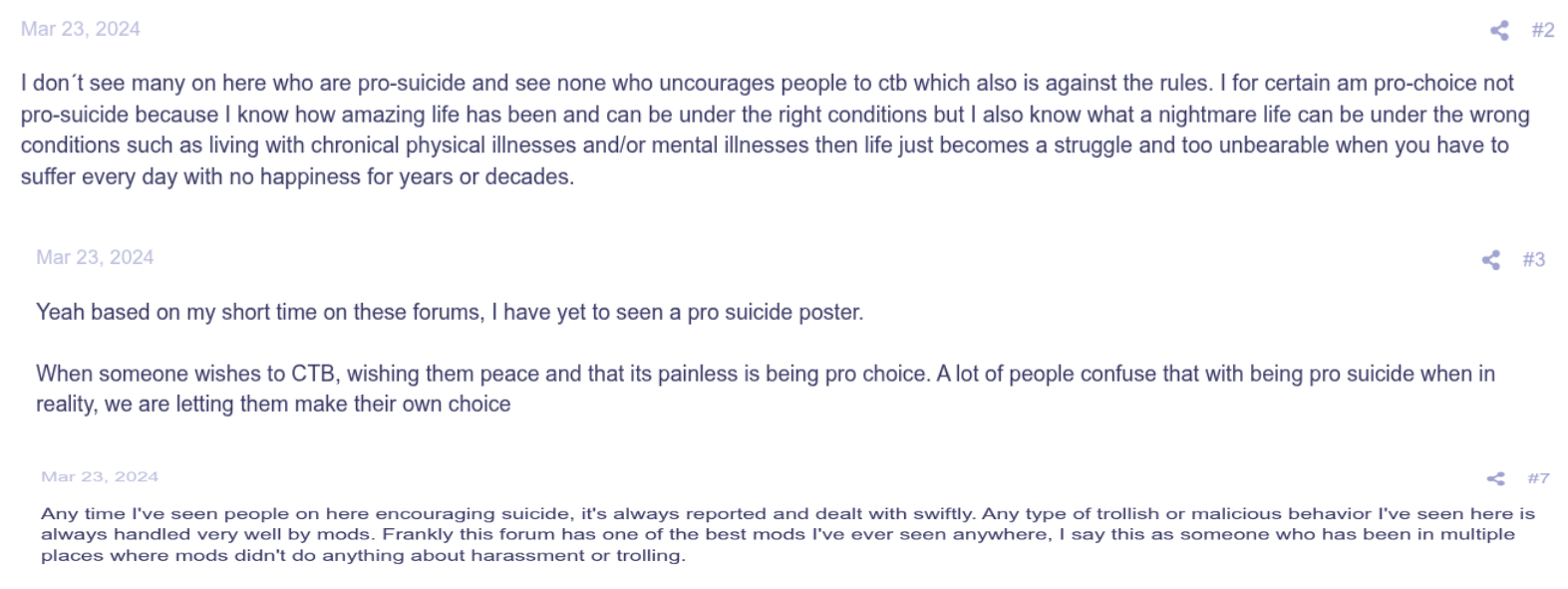
Figure 2: Platform rules stating that users should not promote suicidal behaviours

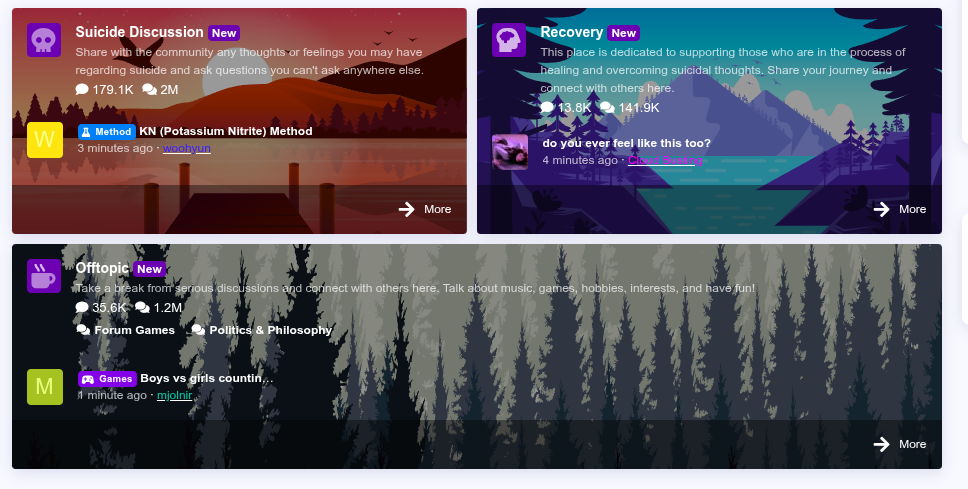
However, despite moderation guidelines prohibiting pro-suicide content, several users acknowledged that they had encountered posts and users on the forum who had encouraged them to engage in suicidal behaviours (Figure 3 below). Moreover, we found that discussions about suicide, methods used for self-injury, preparation and tips were more prominent than recovery-oriented discussions. This disparity is evident in the figures provided by the forum (Figure 4 below). As of November 23, 2026, the Suicide Discussion section of the forum displayed approximately 179,100 threads and 2 million posts, compared with 13,800 threads and 141,900 posts in the Recovery section.
Figure 3: Posts on the forum highlighting users experiencing pro-suicide content
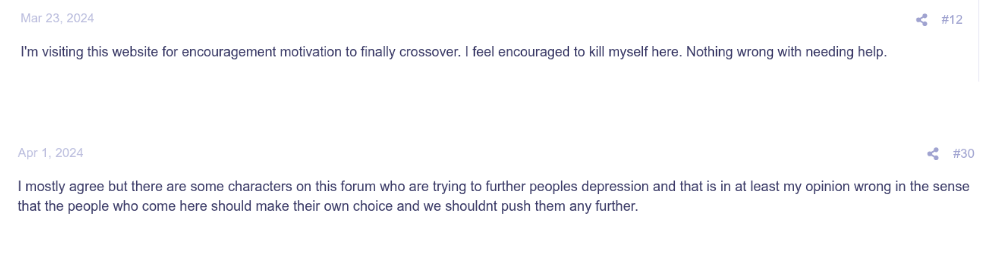
Figure 4: Figures regarding posts and threads displayed by the forum
Even if one accepts the distinction that users draw between the forum being ‘pro-choice’ instead of ‘pro-suicide ’, the forum can serve as a medium that facilitates grave online and offline harm. While the platform prohibits explicit encouragement of suicide, it does not prevent discussions that normalise suicidal behaviour, reinforce existing suicidal thoughts, or expose vulnerable users, including minors, to information that could facilitate self-harm. For example, the threads we encountered included posts providing a step-by-step guide to hanging, drowning, using Potassium nitrite, exit bags and inert gas to commit suicide. Several users sought advice on whether a particular method would work and asked for tips on using these methods. (Figure 5 below)
Figure 5: Threads discussing methods and best practices to commit suicide
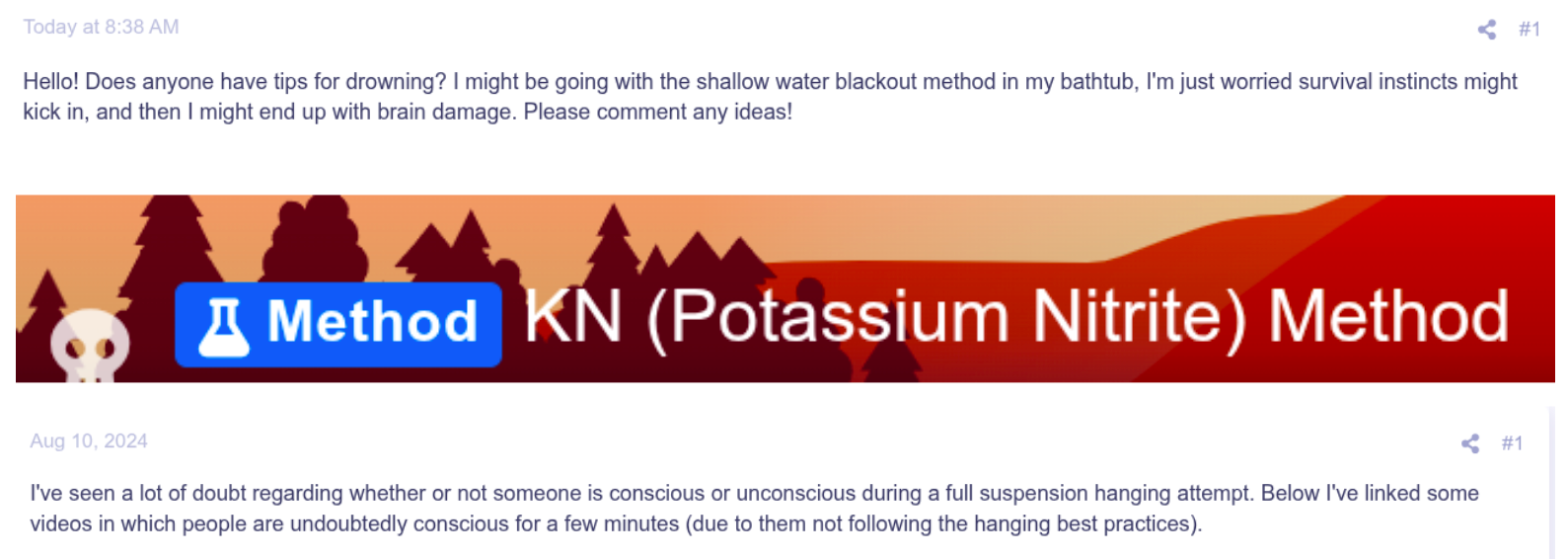
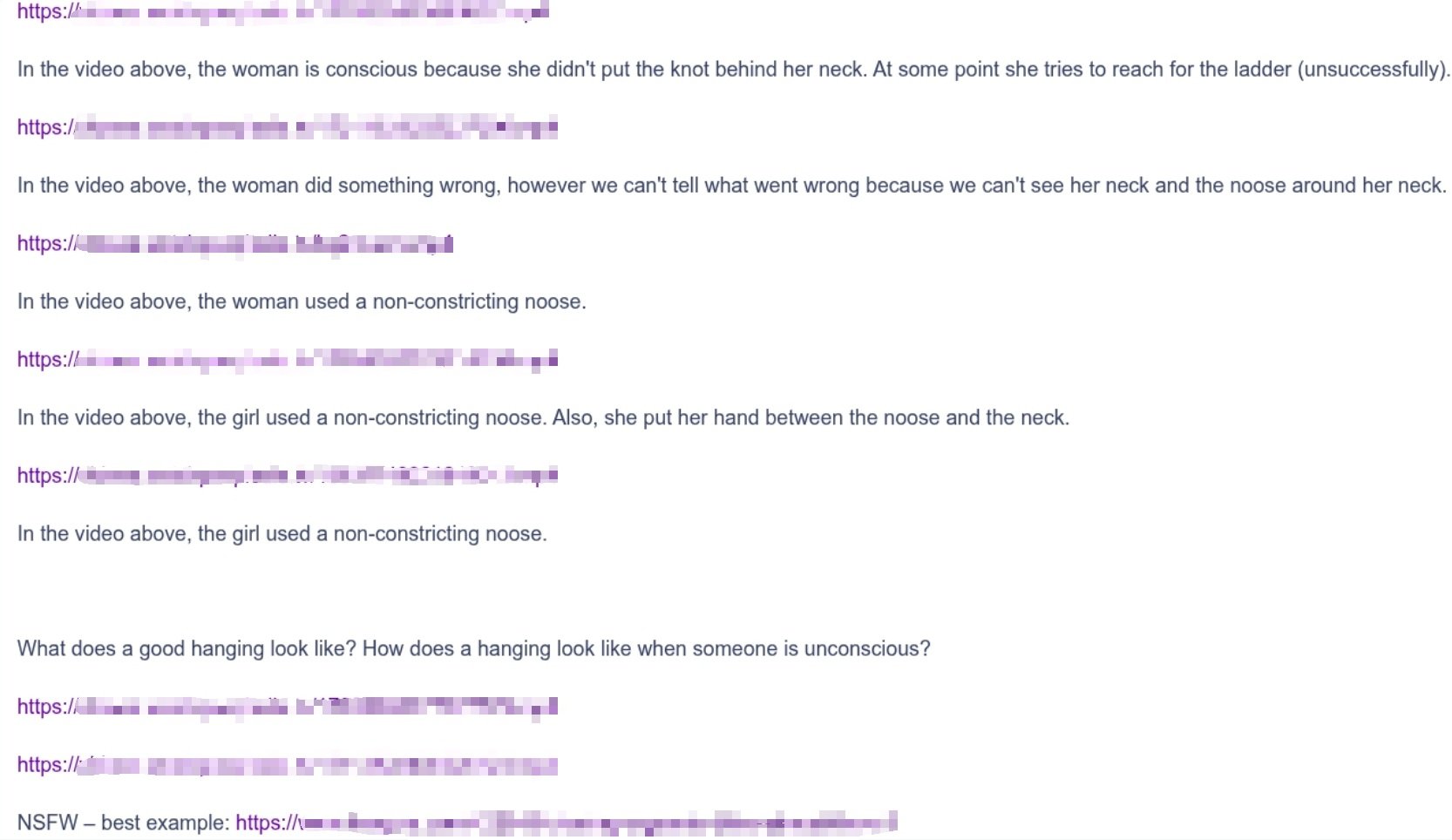
Another user (Figure 6 below) shared links to multiple videos depicting real-life deaths by hanging and analysed them to identify what they described as “mistakes” in the attempts. The post then used these observations to offer guidance on how to hang oneself. Like several others, the post provided links to graphic videos and external websites, which can lead users to material less visible to ordinary platform scrutiny and more difficult to moderate or detect. Such spaces can therefore become conduits not only for practical information but also for the circulation of potentially traumatising and triggering content.
Figure 6: Post studying and sharing “hanging videos” and suggesting improvements
The real-world consequences of Sanctioned Suicide and similar discussion forums can be inferred from a series of global suicide investigations linking suicide discussion forums, access to suicide-related information and deaths.
In Italy, two teenagers who committed suicide were found to have been active participants on Sanctioned Suicide. Investigators found that the teenagers had received advice through chats associated with the community. In Australia, families of people who died after using the forum alleged that their children had encountered encouragement and instructions on pro-suicide websites. Recently, the UK regulator Ofcom reported that Sanctioned Suicide had been cited in multiple coroners' reports and was reportedly linked to more than 130 deaths in the UK. The forum has also been linked to a series of deaths using sodium nitrite. Canadian authorities investigated Kenneth Law, who operated websites selling sodium nitrite and other products, and alleged that he had used an online suicide forum to direct users to his websites. In May 2026, Law pleaded guilty to 14 counts of aiding suicide. Canadian authorities said he had shipped approximately 1,200 packages to more than 40 countries, while police internationally investigated more than 100 deaths linked to his products.
A 2024 study published in JMIR Mental Health, which analysed discussions on Sanctioned Suicide between 2018 and 2022, identified India as the eighth most frequently mentioned country in posts associated with sourcing or using sodium nitrite. The researchers also identified India among the countries where users expressed interest in or attempted to procure the substance. In a recent case, a schoolteacher in Gujarat allegedly laced a drink with sodium nitrite, resulting in the deaths of three people. The investigation found that the teacher had been researching ways to end his own life and had allegedly used one of the victims to test the substance. This case highlights how the harm presented by suicide forums can escalate beyond self- harm and suicide.
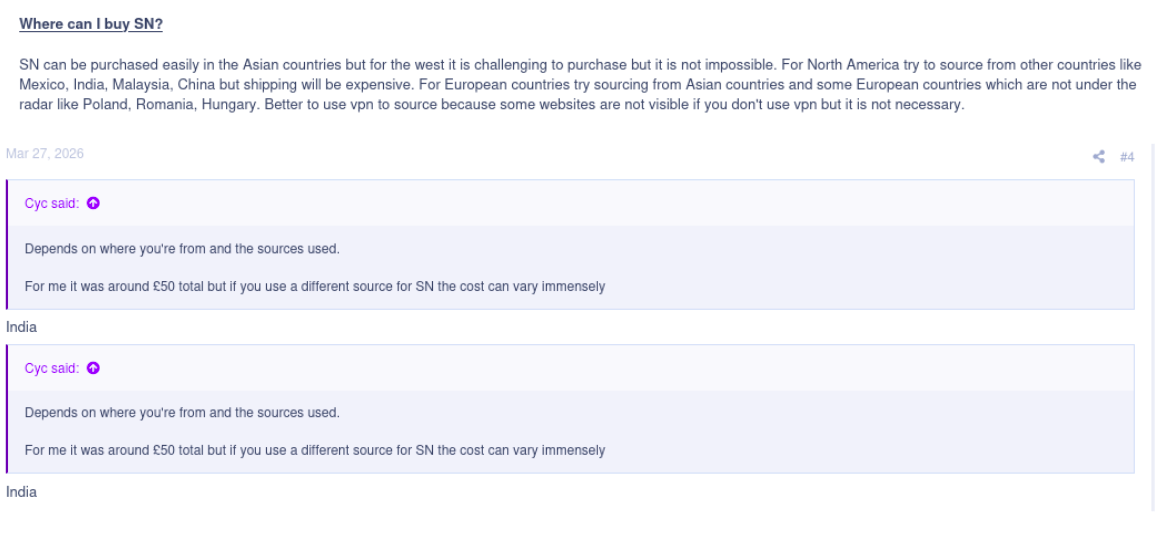
During our investigation, we found several India-specific discussions, including discussions related to the procurement of sodium nitrite. We also found links to secondary platforms selling sodium nitrite in India. (Figure 7 below)
Figure 7: Posts on the forum posted by users from India
Discourse around the impact of social media on mental health tends to focus on screen time and digital addiction. However, a 2025 report by UNICEF found that the correlation between a higher screen time and lower emotional well-being was weak. Instead, the report indicates that adverse mental health outcomes correspond with exposure to harmful content, sexual abuse, and cyber-bullying. Posts exposing minors to self-harm content present an example of how exposure to harmful content can lead to adverse mental health outcomes. A 2024 study highlighted that there is a positive correlation between regular exposure to self-harm content and behaviour related to Non-Suicidal Self Injury (NSSI) behaviour among children and teenagers. Regulating content promoting self-injury requires deeper reflection on platform design obligations and on digital literacy initiatives that help children and parents understand the nature of harmful content and provide them with Self-Help tools to mitigate harm. Most importantly, there is a need to ensure that any intervention, particularly when it comes to children, is supported by robust empirical evidence that incorporates and empathises with children’s perspectives.
Moreover, there have been cases in India that illustrate the wider risks associated with suicide-related forums. In 2016, a 33-year-old Hyderabad software engineer died by suicide after reportedly researching online how to end his life without pain. In Kerala in 2018, two 17-year-old boys died by suicide. Both boys were members of a pro-suicide group. Police also identified other teenagers visiting similar suicide forums and groups. Although the investigation considered multiple factors and did not establish that the group caused the deaths, the case raised concerns about online communities normalising suicide.
Globally, the emergence of these cases has prompted regulatory and law-enforcement action. Italy ordered access to the forum to be blocked following its investigation, while Australian authorities directed ISPs to restrict access to the platform. In the UK, Ofcom investigated the forum under the Online Safety Act, fined its provider £950,000 in May 2026 and secured a geoblock that prevents access for the vast majority of UK users.
Blocking access to Sanctioned Suicide should be the first step. Restricting access to the forum adds friction to access and can deter vulnerable users, including minors, who might otherwise access it easily. However, blocking alone is not sufficient. In countries that have already geoblocked the forum, it has remained accessible through VPNs, proxies, and mirror links. Moreover, blocking the forum does not address the demand that sustains these communities. Blocking should therefore be paired with action on the conditions that lead people to seek out these spaces: limited access to mental-health services, inadequate crisis support, social isolation, and the lack of safe, non-judgmental spaces to discuss suicidal thoughts without fear of stigma or dismissal.